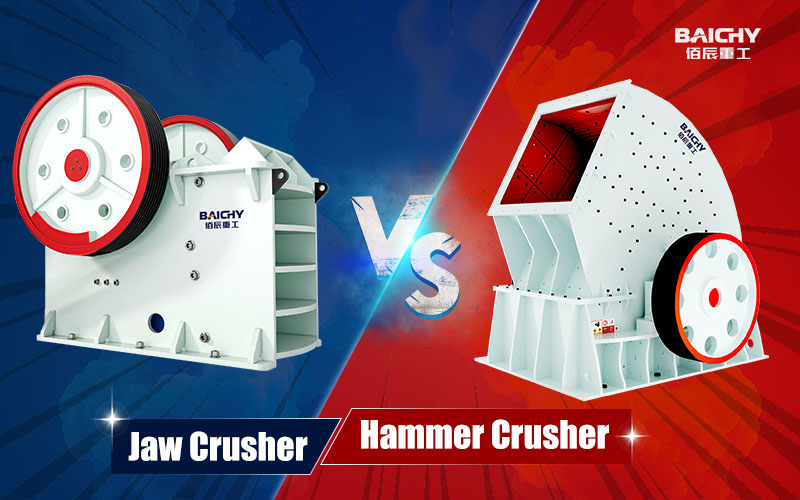
Jaw Crushers vs. Hammer Crushers
In mines, quarries, aggregate production lines, and large-scale engineering projects, primary crushing serves as the critical "bottleneck" of the entire process flow. The choice of primary crushing equipment directly determines the efficiency of subsequent production, energy consumption, finished product quality, and overall operating costs. Among the vast array of primary crushing devices, jaw crushers and hammer crushers undoubtedly stand out as the two most prominent "protagonists"; however, their technical approaches and application philosophies differ fundamentally.
As a professional crushing equipment manufacturer with decades of deep expertise in the field of mining machinery, Baichy understands that making the right initial choice is far more valuable than undertaking countless laborious adjustments later on. This article will provide an in-depth analysis of every aspect of these two core crushing devices, supplemented by our expert selection recommendations and real-world case studies, to help you make the most informed decision.

Stone Crushing Plant PDF,Download ↓↓↓
I. Core Concepts and Crushing Principles: The Fundamental Difference Between Compression and Impact
To understand the distinctions between these two types of crushers, one must first examine their underlying "crushing philosophies."
1. Jaw Crusher: The Robust and Steady "Master of Pressure"
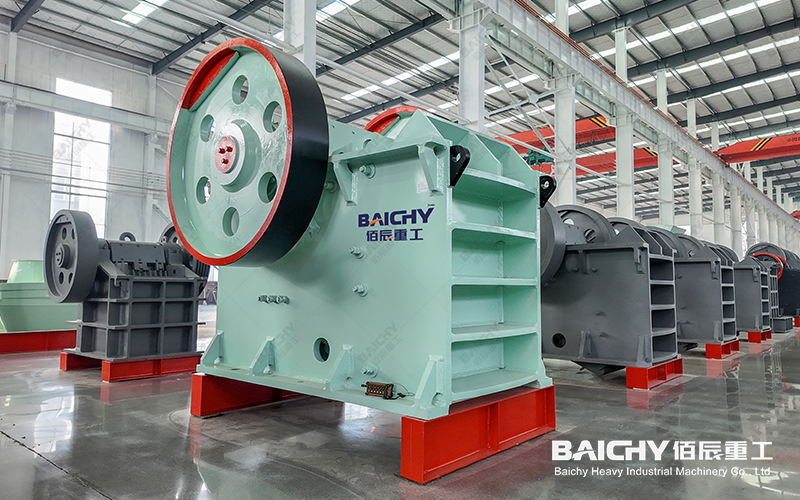
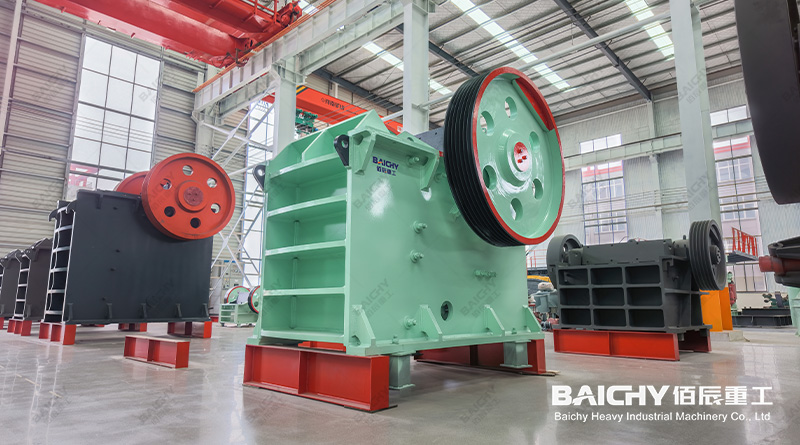
PE Jaw Crusher
The operating principle of the jaw crusher is biomimetic, modeled after the chewing action of animal jaws. Its core mechanism involves the periodic reciprocating motion of a movable jaw relative to a stationary jaw; within the crushing chamber formed between these two massive "jaw plates," immense compressive force is applied to the material, thereby achieving crushing and splitting.
• Characteristics: This primary crushing method is predominantly "static-pressure" driven, delivering a force that is both immense and direct. Its structure is exceptionally robust, and the swing stroke of the movable jaw remains fixed—much like a poised and steady weightlifter.
• Process: Large blocks of material enter the V-shaped crushing chamber, where they undergo preliminary crushing in the upper section. As they descend, they are continuously compressed and reduced in size until they are discharged through the outlet at the bottom.
2. Hammer Crusher: The High-Efficiency, Fierce "Kinetic Warrior"
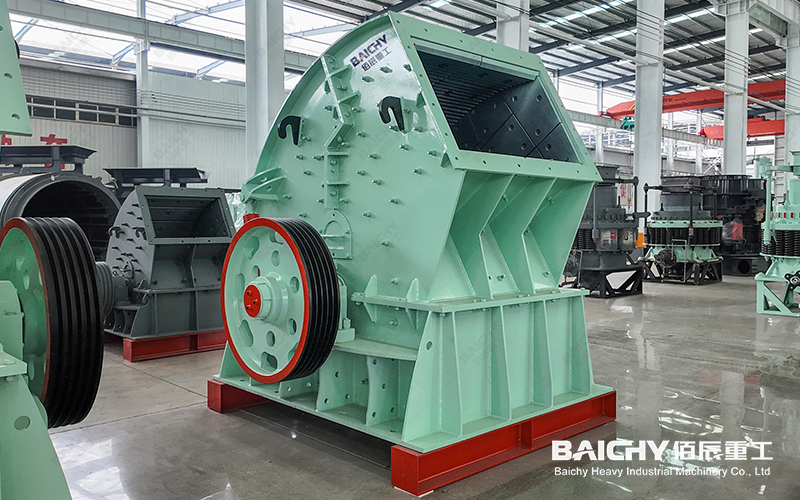
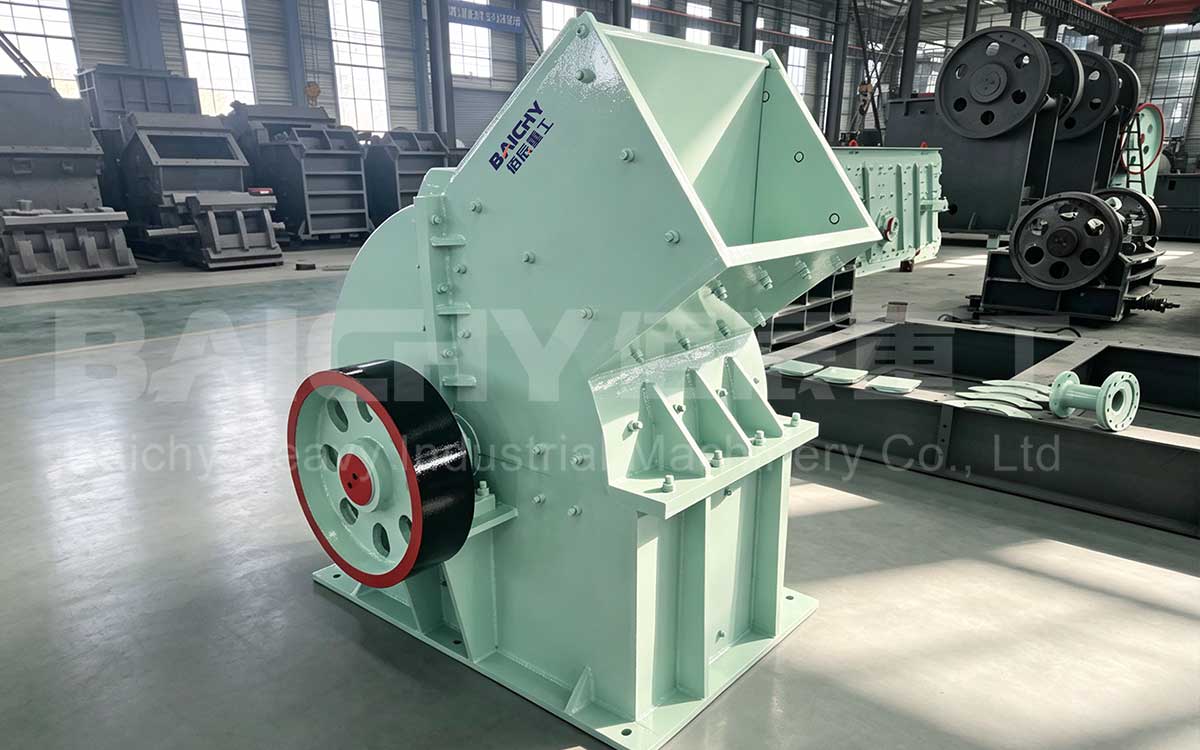
PC Hammer Crusher
The hammer crusher, conversely, represents the "kinetic impact" school of crushing. Its core component is a high-speed rotating rotor, to which several—or even dozens—of heavy-duty hammerheads are pivotally attached. Upon entering the machine, the material is immediately subjected to direct, high-velocity strikes and collisions from the rotating hammerheads; alternatively, it may be hurled against the impact liners, undergoing secondary and tertiary collisions that result in its pulverization.
• Features: This crushing method is primarily driven by "dynamic impact loads," offering high efficiency and a large crushing ratio. Its operation is vigorous and intense—much like a warrior wielding a heavy hammer.
• Process: After raw materials receive their initial strike from the hammer crusher's hammers, fine particles meeting the size specifications are discharged through the gaps in the bottom grate bars. Oversized lumps that do not meet the criteria remain within the crushing chamber, where they are subjected to repeated impacts until they reach the required particle size.
II. Core Parameters and Performance Comparison Overview
To provide a more intuitive illustration of the differences, we present a quick comparison using the following parameter table:
| Comparison Item | Jaw Crusher | Hammer Crusher |
| Crushing Principle | Compression, Splitting | Impact, Collision |
| Applicable Material Hardness | High-hardness, highly abrasive materials (e.g., granite, basalt, quartzite, iron ore) | Medium-to-low hardness, low-abrasion materials (e.g., limestone, bluestone, gypsum, coal gangue, slag) |
| Feed Size | Extremely large; can easily process massive raw lumps exceeding 1 meter in size, making it the unrivaled choice for primary crushing. | Relatively small; typically requires material dimensions of less than 500 mm, making it better suited for secondary crushing or the primary crushing of medium-to-soft rocks. |
| Discharge Size | Relatively coarse with uneven particle distribution; contains a comparatively high proportion of needle-like and flaky particles. Controlled by adjusting the gap at the bottom of the jaw plates. | Relatively fine and uniform; produces particles with excellent shape (predominantly cubic). Precisely controlled by adjusting the gaps in the bottom grate bars. |
| Moisture/Clay Content Tolerance | Highly adaptable; wet or sticky materials are unlikely to cause clogging, ensuring high operational reliability. | Extremely sensitive; wet materials or sticky clay can easily clog the grate bars, leading to a sudden drop in output capacity or even a complete shutdown. |
| Metal/Tramp Iron Tolerance | Strong. Utilizes hydraulic or mechanical overload protection systems that automatically release to clear uncrushable objects, thereby protecting the main machine. | Extremely weak. The entry of foreign objects (such as metal) can easily cause hammer heads to fracture, rotors to sustain damage, or grate bars to be rendered unusable, resulting in significant financial losses. |
| Wear Parts & Maintenance | Wear parts (jaw plates) have a long service life and extended replacement cycles (typically several months); maintenance is simple and costs are relatively low. | Wear parts (hammer heads, grate bars, impact liners) wear out extremely quickly, requiring frequent replacement; this results in high maintenance costs and significant downtime. |
| Energy Consumption & Noise | Energy consumption is relatively low, though the mechanism involves idle strokes. Operational noise and vibration levels are relatively high. | The rotor rotates at high speeds, leading to high energy consumption during no-load operation; however, due to its high crushing ratio, its energy efficiency per unit of output may be superior. Operational noise and dust generation are extremely high. |
| Process Role | Serves as the classic "primary crusher," preparing semi-finished materials for the next stage of crushing (e.g., cone crushers). | Often serves as the core component in "single-stage crushing" systems—particularly in limestone production lines—enabling a "one-step molding" process. |
| Equipment Investment | The structure is relatively simple, and the initial purchase cost for a single unit is typically lower. | The structure is complex, and the initial purchase cost for a single unit may be higher. |
III. In-Depth Analysis of Application Scenarios: Tailoring Solutions to Local Conditions Reveals True Advantages
1. The "Main Battlefields" for Jaw Crushers
• Crushing Hard Rock: Serving as the first line of defense in production lines for hard rocks such as granite, basalt, and river pebbles. Its robust structural design provides the fundamental assurance required to withstand high-stress operating conditions.
• Primary Crushing in Metal Mines: In beneficiation plants for iron, copper, gold, and other ores, jaw crushers are used to reduce run-of-mine ore to a particle size suitable for ball mill feed; in this context, their reliability is of paramount importance.
• Complex Operating Conditions: When material composition is complex (potentially containing unpredictable foreign objects) or moisture content fluctuates significantly, the jaw crusher's strong adaptability and resistance to clogging offer unparalleled advantages.
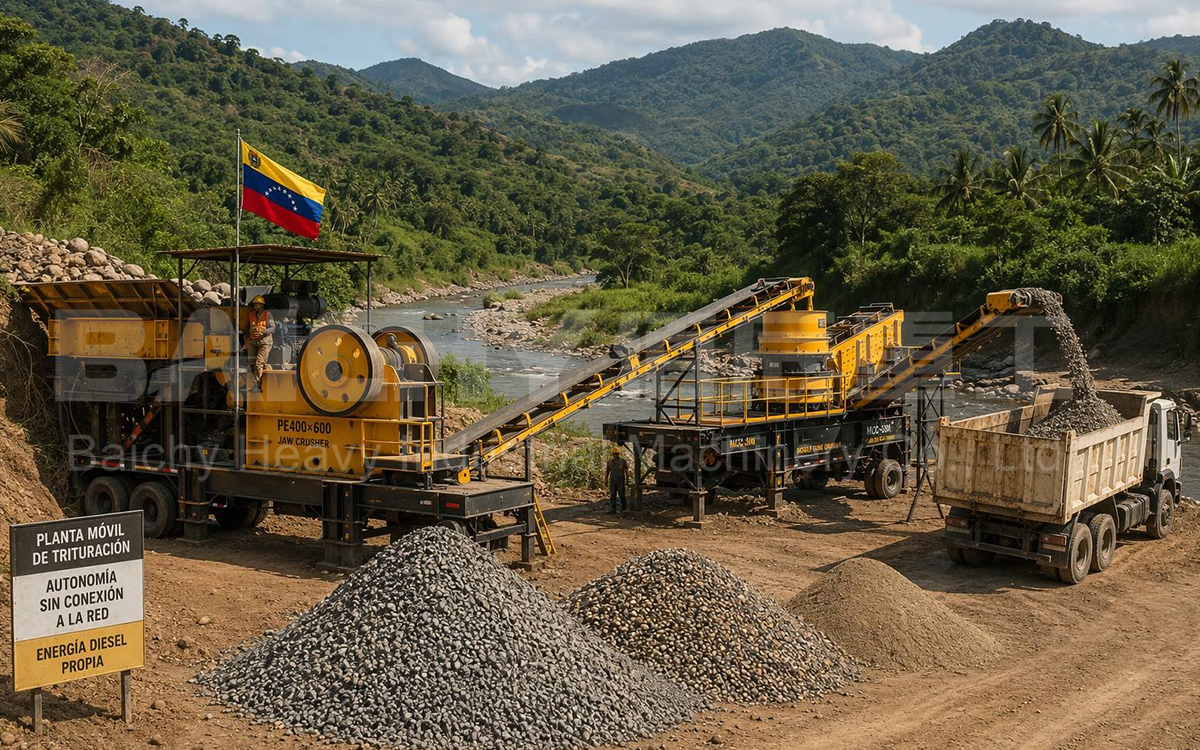
• Mobile Crushing Stations: In fields requiring frequent site relocation—such as construction waste processing and urban demolition projects—mobile crushing stations equipped with jaw crushers serve as the core configuration, prized for their rugged durability and strong adaptability.
2. The "Advantageous Domains" for Hammer Crushers
• Limestone and Cement Production Lines: This represents the "classic stage" for hammer crushers. Single-stage hammer crushers can directly reduce run-of-mine ore to the required mill-feed size (e.g., <25 mm) in a single pass, thereby greatly simplifying the overall process and generating significant savings in equipment investment and civil engineering costs.
• "Single-Stage Shaping" in Aggregate Production: For medium-hardness materials such as limestone and dolomite, utilizing a hammer crusher allows for the direct production of construction aggregates with excellent particle shape, thereby reducing the need for subsequent shaping processes.
• Crushing of Brittle Materials (Coal, Coke, Gypsum, etc.): Leveraging its high crushing ratio and efficient impact mechanism, the equipment can easily process these low-abrasion materials while demonstrating exceptional energy efficiency.
IV. Our Professional Equipment Recommendations
Based on the above analysis, [Your Brand Name] recommends the following market-proven, flagship crushing equipment:
Recommendation 1: C-Series High-Performance Jaw Crusher
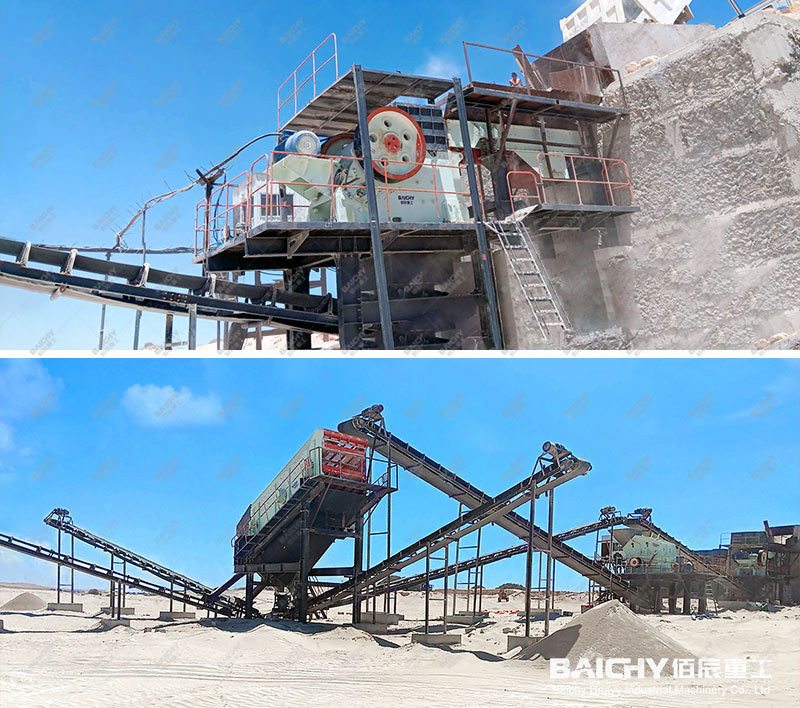
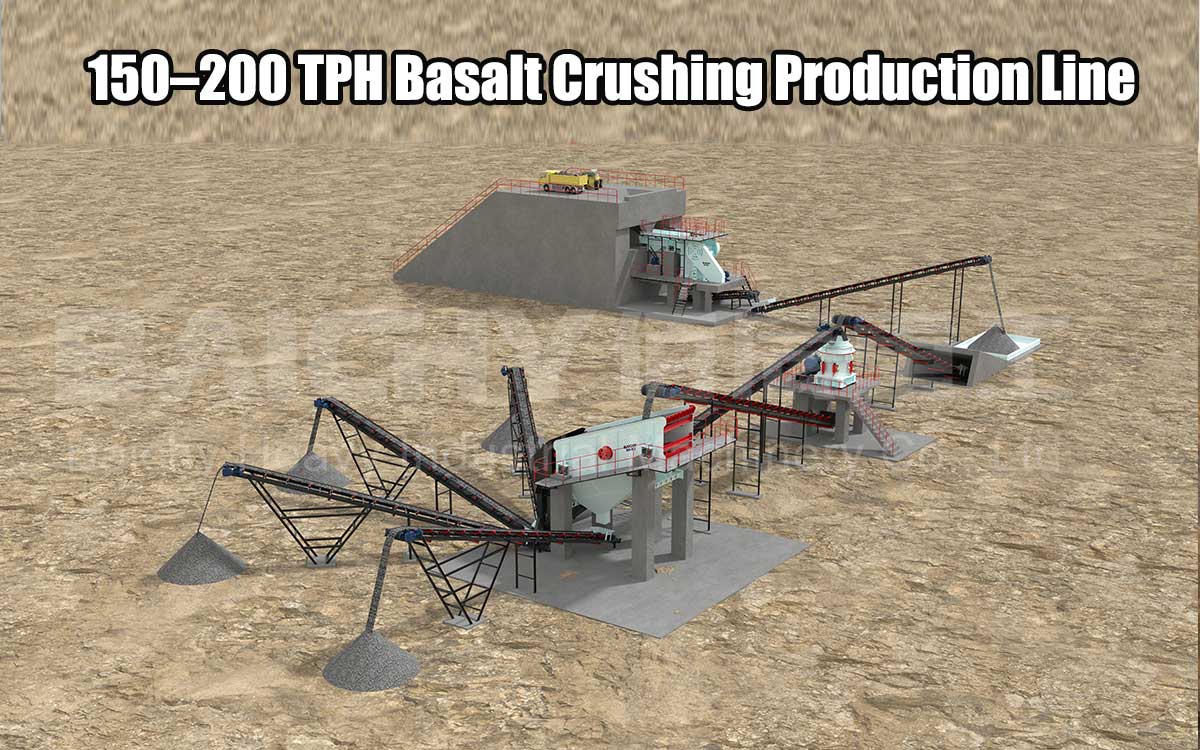
Stationary-crushing-production-line
• Positioning: The flagship choice for the primary crushing of hard rock.
• Core Advantages:
◦ Exceptional Durability: Features a superior cast steel frame and high-manganese steel jaw plates, specifically engineered for high-stress and high-abrasion operating environments.
◦ Greater Crushing Ratio: An optimized crushing chamber design facilitates larger feed intake and higher crushing efficiency, resulting in a more uniform product particle size.
◦ Intelligent & Convenient Maintenance: Equipped with hydraulic discharge opening adjustment and a hydraulic chamber clearing system, significantly reducing maintenance time and minimizing safety risks for personnel.
• Applicable Scenarios: Large-scale granite and basalt quarries, primary crushing in metal mining operations, and sand & aggregate production lines for major infrastructure projects.
Recommendation 2: PC-Series Single-Stage Hammer Crusher
• Positioning: An economical and highly efficient solution for the "single-stage shaping" of medium-to-soft materials, such as limestone.
• Core Advantages:
◦ Complete Crushing in One Pass: A single unit can accomplish the work typically requiring a traditional two-stage or even three-stage crushing system, thereby drastically reducing system investment and operating costs.
◦ Superior Product Particle Shape: A unique rotor dynamic design and grate bar structure ensure uniform discharge particle size with low needle-and-flaky content, resulting in high-value finished products.
◦ Reversible Hammer Heads: Features heavy-duty hammer heads that can be flipped and reused multiple times as they wear, effectively lowering the hammer head consumption cost per ton of processed material.
• Applicable Scenarios: Limestone crushing in cement plants, large-scale aggregate production lines with an output of 1,000–3,000 tons per hour (using limestone feedstock), and comprehensive processing projects for coal gangue. V. Customer Case Studies: Demonstrating Our Capabilities
Case Study 1: A Large-Scale Granite Aggregate Project in Hubei
• Challenge: The raw material consisted of extremely hard granite. The project required a designed hourly output of 2,000 tons of high-quality aggregate, demanding equipment with exceptional reliability and ease of maintenance.
• Solution: We recommended a core equipment combination consisting of a "C160 Jaw Crusher (Primary Crushing) + HPC400 Multi-Cylinder Hydraulic Cone Crusher (Secondary Crushing)."
• Results: The jaw crusher steadfastly withstood the impact of the high-hardness materials, experiencing no major mechanical failures over a two-year period, while the jaw plates maintained a service life exceeding 8 months. The entire production line operated smoothly, annual production targets were exceeded, and the client spoke highly of the equipment's reliability.
Case Study 2: Limestone Mine Upgrade for a Cement Group in Shandong
• Challenge: The existing two-stage crushing process (Jaw Crusher + Impact Crusher) involved a lengthy workflow, high energy consumption, and numerous dust emission points. The client sought to simplify the process and reduce overall operating costs.
• Solution: We deployed a single large-scale DPC2022 Single-Stage Hammer Crusher to directly replace the original two-stage crushing system.
• Results: The solution achieved "two-stage crushing in a single machine," producing an output particle size of <25mm—fully meeting the requirements for raw meal grinding. Plant-wide electricity consumption dropped by approximately 15%, the required footprint was reduced by 40%, and annual savings on maintenance and labor costs exceeded one million RMB.
VI. Frequently Asked Questions (FAQ)
Q1: Our raw material is medium-hardness limestone, but it is occasionally mixed with soil. Should we choose a jaw crusher or a hammer crusher?
A1: This situation requires careful evaluation. If the soil content is low and controllable, a single-stage hammer crusher offers distinct advantages in terms of efficiency and product particle shape. However, if the soil content is high, or if the material becomes wet and sticky during the rainy season, we strongly recommend adopting the traditional two-stage configuration: "Jaw Crusher + Impact Crusher." By utilizing a jaw crusher for reliable primary crushing—which can easily handle wet, sticky materials—and subsequently using an impact crusher for intermediate and fine crushing, you can ensure the desired particle shape for the finished product. Although the initial investment may be slightly higher, the long-term operational stability and reliability of the production line should be the primary consideration.
Q2: The hammer heads on our hammer crusher are wearing out too quickly, resulting in high replacement costs. Do you have any effective solutions?
A2: Hammer head wear constitutes a major operational cost for hammer crushers. Our solutions are as follows: 1) Material Upgrades: We offer hammer heads made from various alloy materials—such as high-chromium composites and tungsten-titanium alloys—which can be selected based on the specific characteristics of your raw materials to increase service life by 30% to 100%. 2) Design Optimization: Our DPC series hammer heads feature a symmetrical, balanced-weight design; once one side wears down, the head can be flipped over and reused, effectively doubling its service life. 3) Process Adjustments: Ensure that the material feed is continuous and uniform to prevent unbalanced forces on the rotor, which can lead to accelerated, localized wear on specific hammer heads.
Q3: I am planning to set up a mobile crushing production line. Should I choose a mobile jaw crusher or a mobile hammer crusher?
A3: This depends entirely on the specific materials you intend to process. For materials with complex compositions—such as construction waste or demolition concrete that may contain steel rebar—you must select a mobile crushing station equipped with a jaw crusher; its robust ability to handle tramp iron and its adaptability serve as essential safeguards. For fixed-site operations—such as limestone mines or quarries—where frequent site relocation is required and the raw material is relatively pure, a mobile station equipped with a heavy-duty hammer crusher is more efficient. This is because it minimizes the need for downstream equipment, enabling a mobile "one-step crushing" process. Our engineers can provide the most optimal mobile crushing solution tailored to your specific material samples and operating conditions.
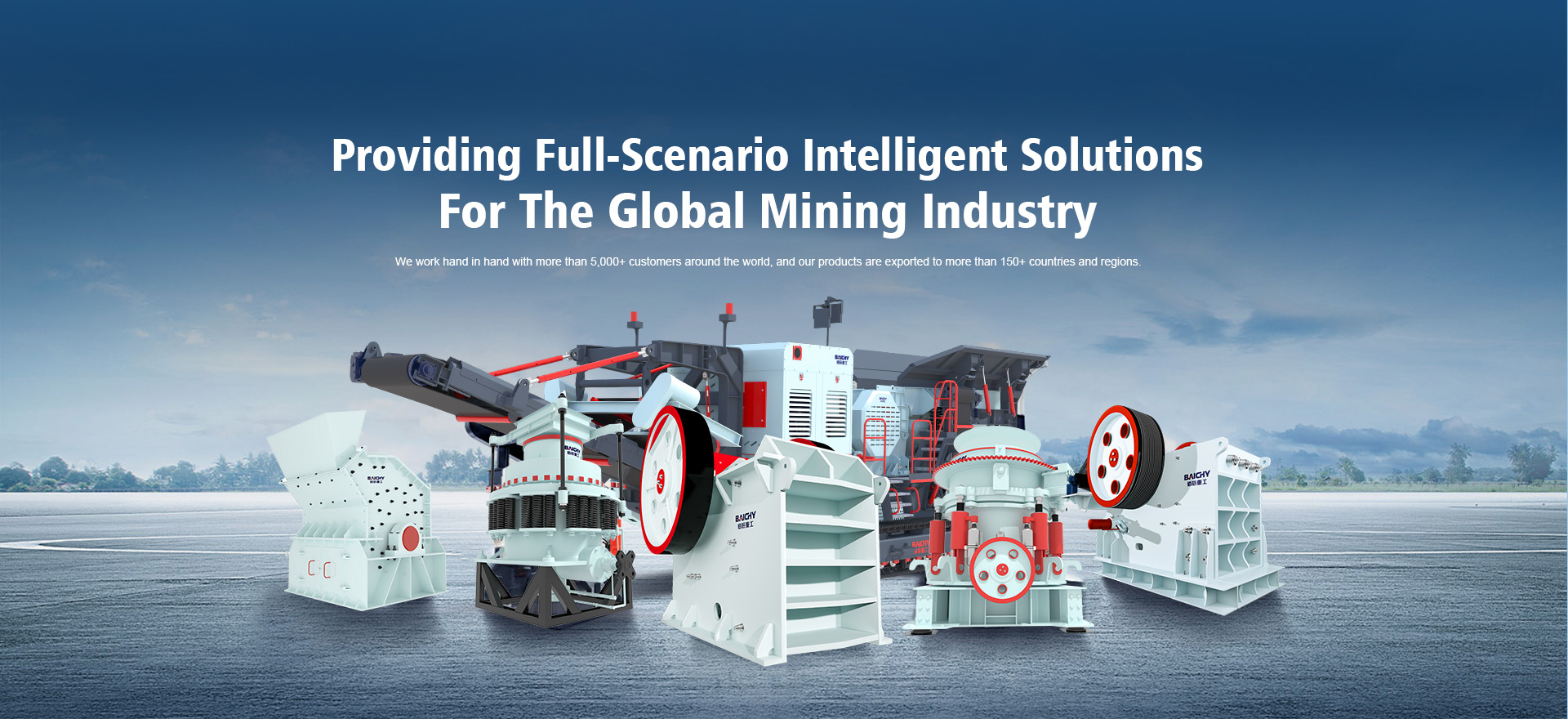
About of Baichy Heavy Industry
Baichy Heavy Industry is a high-tech mining equipment company integrating R&D, manufacturing, sales, and after-sales service. Focusing on crushing, grinding, and mineral processing equipment, we provide professional solutions to our customers. We are ISO9001:2015 、certified, and our products include mobile crushing palnts, crawler crushing plant, construction waste crushing plants, jaw crushers, sand making machines, cone crushers, fine crushers, grinding mills, ball mills, etc., all with reliable performance to meet diverse project needs.
Our advantages:
• Professional pre-sales support: Free project design and comprehensive solutions to help you accurately select the right equipment;
• Comprehensive on-site service: Providing installation guidance and worker training to ensure smooth equipment commissioning;
• Reliable after-sales guarantee: A complete after-sales system, timely response to technical inquiries and equipment maintenance, ensuring long-term stable operation.
To protect your rights, please contact us through the following official channels for professional service:
Official Website Customer Service
https://wa.me/+8615093222637
Email: [email protected]
We are committed to providing high-quality equipment and full-cycle services to deliver comprehensive intelligent solutions for the global mining industry!